PD selected by Bloomberg Philanthropies to help supercharge the impact of UK metro mayors
Read more
The signals coming from the UK Government are clear: devolution is no longer just a policy experiment. It is the next frontier for rebuilding state capacity and delivering public service reform.
Turning a more radical, place-based model of governance from vision into reality demands a fundamental shift in how the state operates. It will mean rebuilding deep internal capacity in places where it has been degraded over time, and will require a strong commitment to move away from an outsourced state.
At PD we’ve partnered with many organisations to prove that a place-based approach is possible, working with our central and local government clients to make public sector delivery more resilient, more effective and more sustainable.
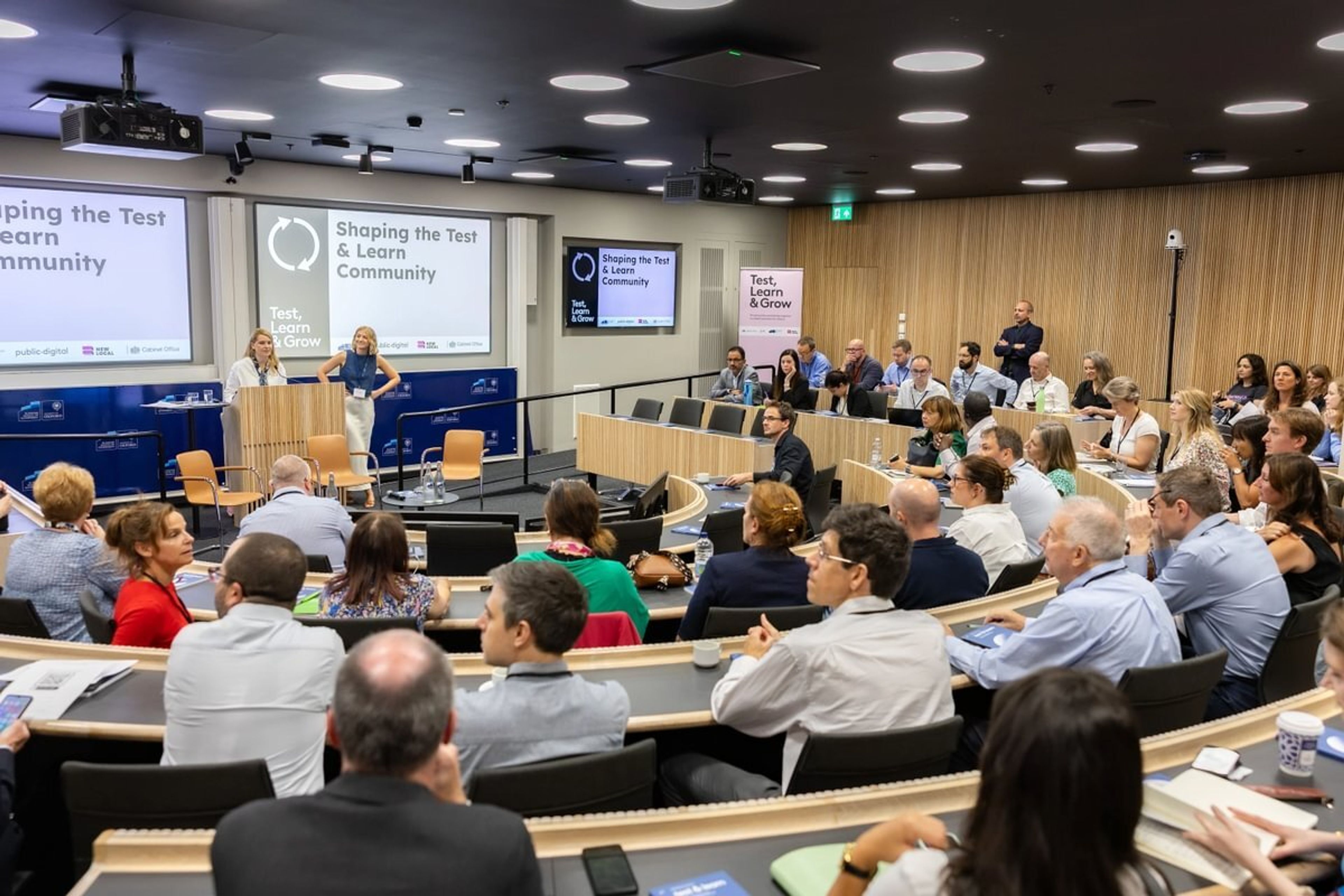
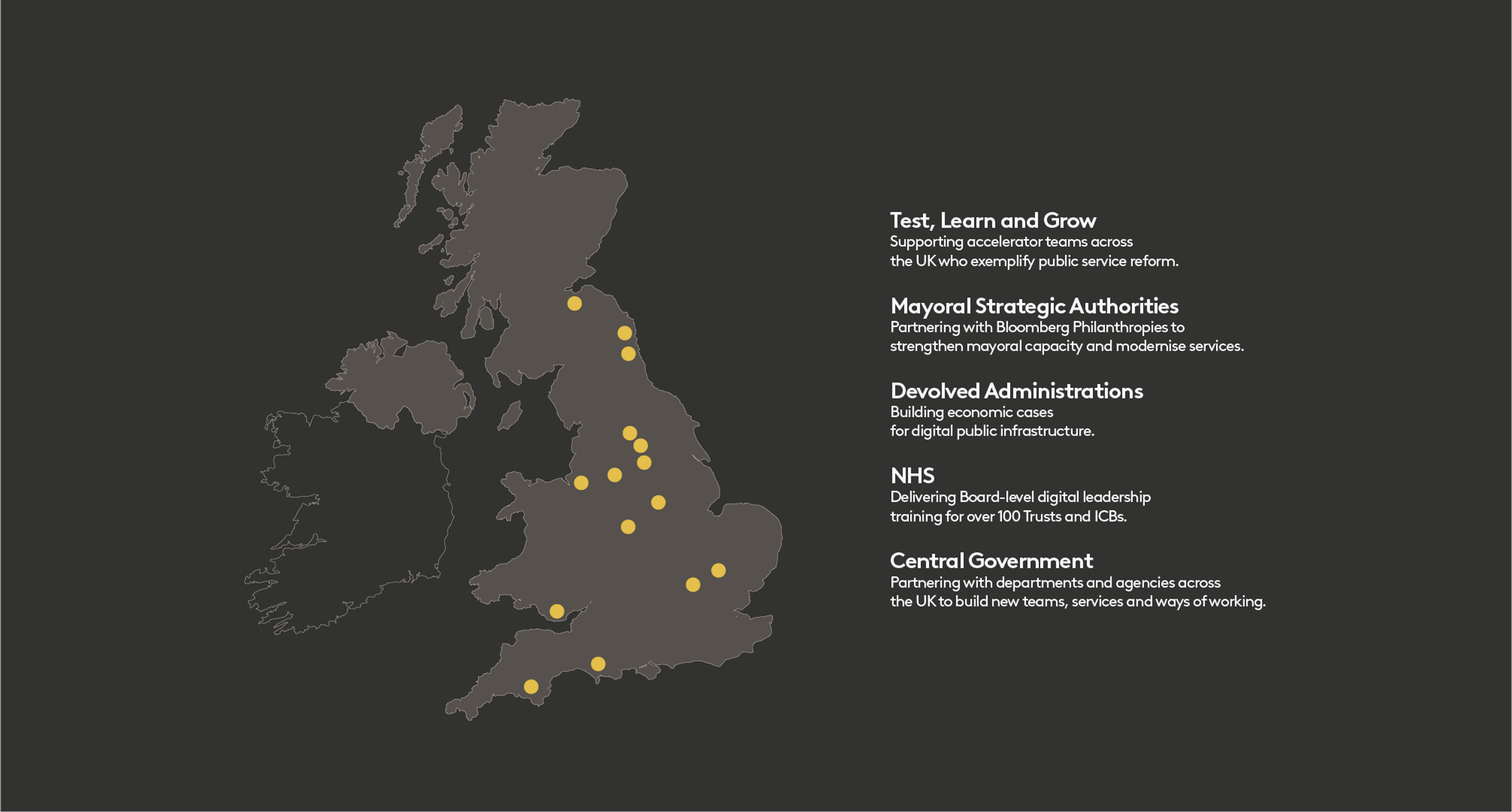
Through our partnerships with the Cabinet Office and Bloomberg Philanthropies’ Mayoral Strategic Authority capacity building initiative, we’re supporting organisations across the country to adopt a test and learn approach to delivering better public services and embedding a culture of continuous improvement.
Working as the bridge between strategy and delivery, thinking and doing, we know that change only sticks if the vision at the top matches the reality on the ground. Our work often means helping to join all the pieces that need to come together to deliver outcomes: making connections between places, or between disciplines. Connecting central and local government layers to translate national policy goals into regional reality, felt by the public. Or linking up digital, technology, policy and operations; ensuring that policy isn't written in a vacuum, but is shaped by citizen’s needs and ground truths.
We’ve long been working with others in this space to think about the needs of modern local government. Our report published with the Future Governance Forum last year identified many of the opportunities in Local Government to deliver Impactful Devolution. Those opportunities range from tackling the ‘missing middle’ of a fragmented digital infrastructure to making data sharing and exchange a default rather than the exception.
Devolution does not mean the centre disappears, but it does mean that the centre’s role and the way it behaves will need to change. Equally, our local and regional governments need to be ready to take on the additional responsibilities and accountabilities that devolution promises.
We think the change starts from:
The challenge of rebuilding state capacity through devolution represents a rare opportunity to bring the whole country's talents together to deliver public reform outcomes. It needs to be tackled with the same political attention, financial resources and leadership bandwidth as Government’s biggest programmes. How it should differ is in the ways of working, skillset and approach we choose to take.
Creating those conditions for the state to build the capability for adaptation and learning, collaboration and convening - at every level, in every part of the country - will be what unlocks the potential for the real transformation in public services that citizens are demanding to see.

Partner and Head of Central Government

Head of Local Government