Government
We work with countries, states and government departments to help them achieve transformation at scale.
Read more
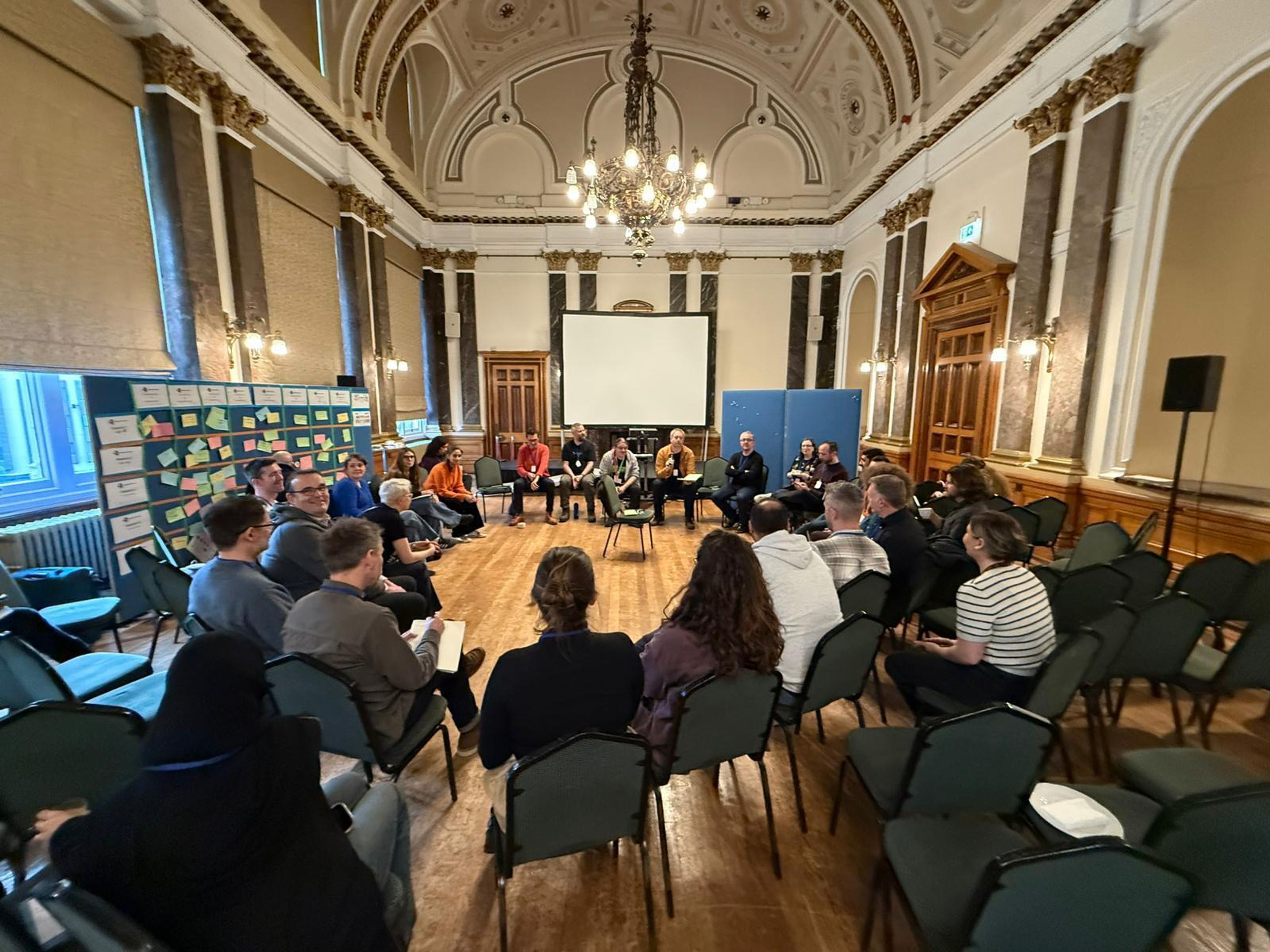
UKGovCamp is an annual ‘unconference’ event where people working in or with the public sector come together for a day of sharing learning and ideas around the theme of achieving better outcomes for the people who interact with public services.
For PD, it’s a brilliant way to re-connect with the community, and encourage debate and conversations around everything from data, ethics, behaviours and even learning through gamification.
This year was no exception. We participated in a range of brilliant sessions, and two of us pitched our own: Oli Lovell on what to do when leadership has already announced a solution and Linda Humphries on test and learn.
In this post we provide a summary of the sessions which resonated with us, as well as those we facilitated.
We would love to hear your thoughts on what we observed and discovered. Contact linda.humphries@public.digital or oli.lovell@public.digital to get in touch.
It’s all about the data: Linda Humphries
I particularly enjoyed the session data not documents: a deliberately provocative pitch exploring ideas around the nature of data and documents and the differences between them (e.g. data for workflows versus verifiable records of proof). Planning and procurement data were two examples of where data can often be ‘locked’ into documents rather than enabling a flow of information that enables more joined-up services and decision-making.
Another great session on data sharing across local and central government was run by GDS Local, focusing on blockers to accessing relevant data: risk, limited trust and misunderstandings about responsibilities and accountabilities. But having more seamless public services, and more evidence based decision and policy-making, requires responsible and safe data sharing. We need more public sector blog posting about what data sharing has enabled and how it was achieved to help others unblock safe and appropriate data sharing.
Pitching a session on test and learn: Linda Humphries
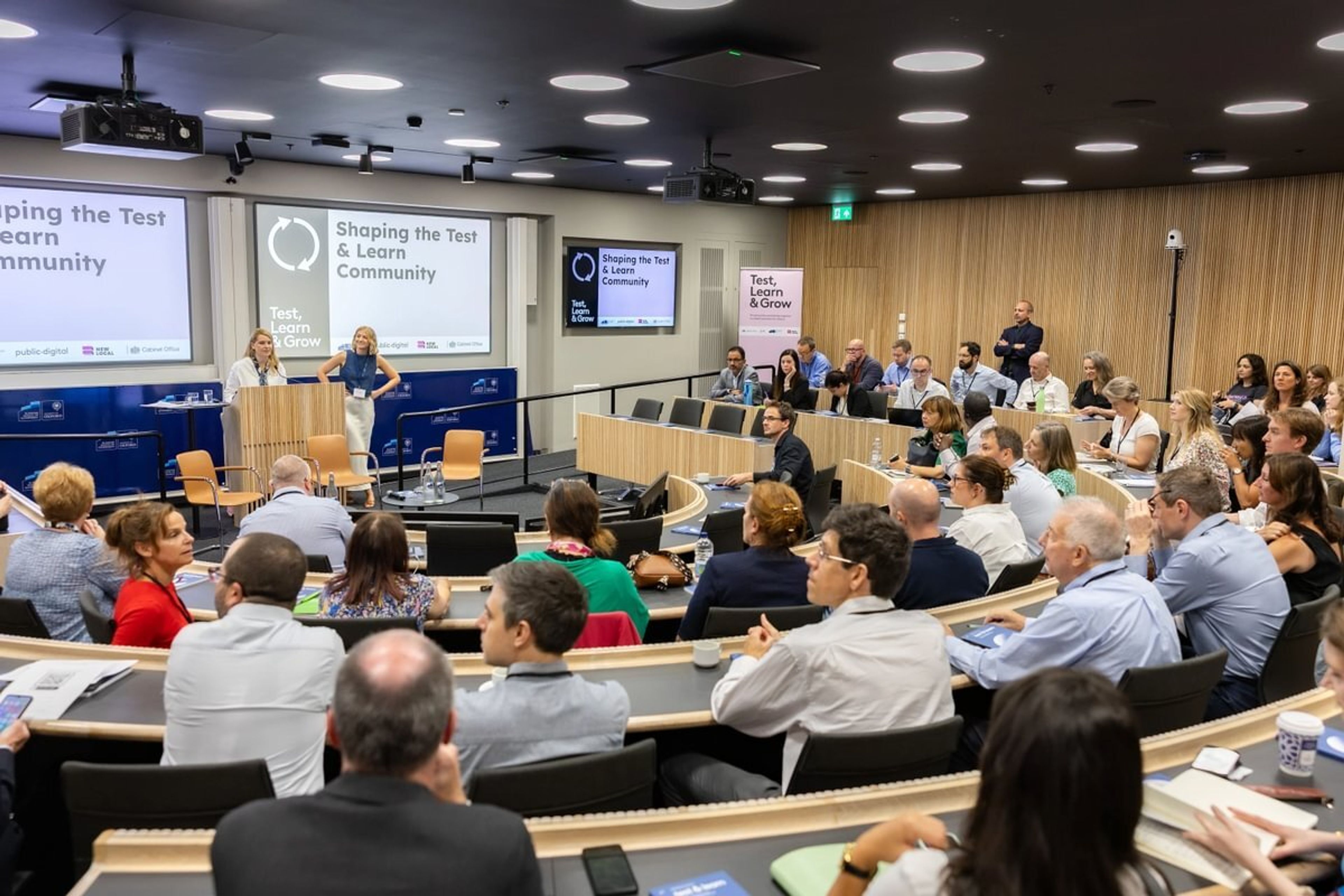
Public Digital is the lead delivery partner on Cabinet Office’s Test, Learn and Grow programme. I’m our partnership lead for places working on this programme. In the session Journeying from the Upside Down to the Right Side Up with Test & Learn, I explored the conditions which help teams to test things out and to learn, and to shape services and policies from the ground up. That means deeply rooting them in the experiences and needs of the communities they are designed to serve, rather than from the top down.
Some key themes that came through were the need for:
Structured learning cycles and approaches that enable sense-making to help with keeping focused on actions and outcomes
Scaffolding to help guide people who have never worked in this way, along with financial case studies to build the case and space for doing the work
Careful communication on the purpose and need for testing and learning - it’s about de-risking and creating certainty, not about creating risk and uncertainty in delivery
“Is anyone doing the work to understand the conditions needed? Where is that conversation happening?”, was a question in the room from a local government participant. My response: “Yes there is. That work is happening through Test, Learn and Grow”. We’ve taken what we learned from the civil servants, public officials, civil society representatives and practitioners in the room back into our work with Cabinet Office.
You can get involved and follow what's happening on Test, Learn and Grow by joining their community on LinkedIn.
Pitching a session on what to do if your stakeholders have already announced the solution: Oli Lovell
A pattern I encounter often with clients across sectors is a tendency for stakeholders to prescribe or even publicly announce the solution as part of initiating work. AI has notoriously increased this world wide - taking the top spot from ‘build me an app’ or ‘create a dashboard.’ This approach creates a significant risk for the team, but also the stakeholder. But position, grade and politics are important factors to navigate in any team’s delivery. So at UKGovCamp, I wanted to crowd source and share ideas about how to tackle this delicate challenge.
The session struck a chord and was well attended, and with the help of volunteer facilitators - We gathered:
A collection of examples, real and worried about from the group.
A collection of tips and examples of how teams have tackled these issues in the past.
We are writing up the results into a short, open source playbook that teams can share and use. We would love to read your submissions and ideas.