PD Newsletter #110: A time for boldness, not for panic
👋🏽👋🏻👋🏾 Hello, welcome.
The last month has seen a LOT of noise about AI, and existential debates about what its impact might be.
We think this a time to focus less on that noise, and more on how AI is being used boldly and for public good: to help citizens apply for benefits, to strengthen internal capability, and to empower governments to do more with less.
View this newsletter on LinkedIn
Forwarded this email? Sign up
Latest from Public Digital
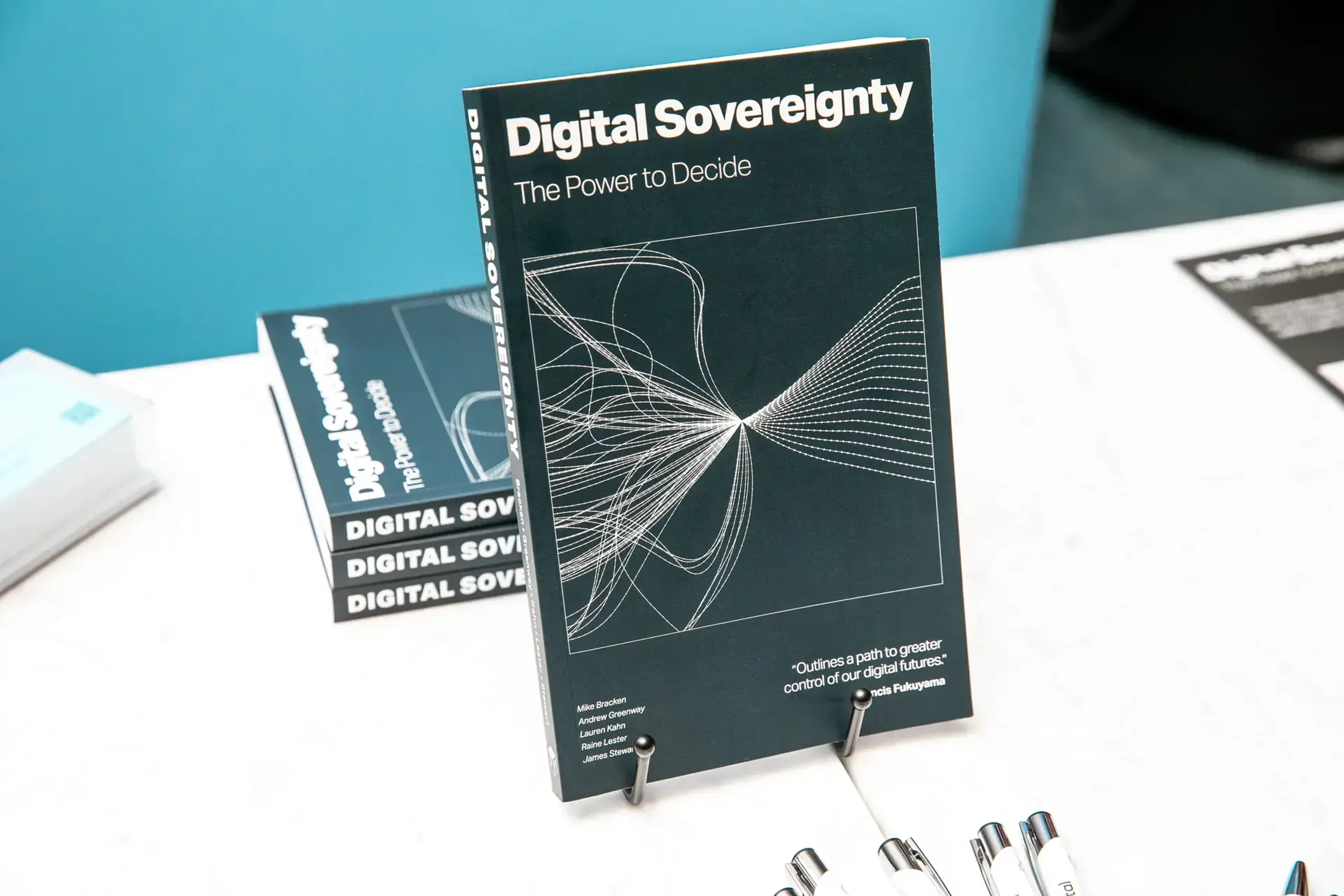
This week marks the publication of our new book, Digital Sovereignty: The Power to Decide. Grounded in our own experience of building digital sovereignty from within institutions, it provides a guide for how CEOs and political leaders can choose their digital futures.
🔍 Read a snippet in Computer Weekly
💡 Read Mike Bracken in Politico on why digital sovereignty matters now for the UK
Intelligence-era ways of working
🌀 Large organisations often manage complexity by transforming governance into reporting and oversight. Oli Lovell argues that only creates the illusion of control, when governance should really be an enabler for maximising the flow of valuable work: “The more complex your programme is, the closer to delivery your decisions need to be made. Otherwise you may just be participating in very expensive assurance theatre.”
🏘️ We love these design principles for Neighbourhood Health Centres - which are intended to support the NHS shift towards locally-delivered prevention and early - from Anjali Moorthy. Includes a helpful ‘even when’ framing to draw attention to what might otherwise be the default. E.g. “A neighbourhood health centre should prioritise prevention. Even when: immediate crisis demand seems more visible and urgent.”
🗄️ How the DC Department of Employment service got off the mainframe in 150 days, from its CIO, Chris Tonjes: “If you do not have that combination of seasoned execution and institutional memory in the room on day one, acquiring it is your actual first project.”
🔢 Really useful stuff from Pramod Sadalageon and Prem Chandrasekaran on how to make your data ready for AI, why it matters, and where to start: “when the data feels wrong, a human double-checks; an agent confidently acts on it. That behavioral gap is what the rest of this discussion is built around.”
🇯🇵 Interesting reading in HBR on how Japan’s oldest family-run companies have survived through uncertainty. TL;DR: long-term thinking and a purpose-led philosophy: “a settled understanding of what their firm was for, what could change, and what could not.”
Technology in focus
🤔 Responding to Dario Amodei’s botnet warning in his call to pace frontier AI, former head of the UK's NCSC Ciaran Martin points out the poor understanding of cyber security apparent in these claims. Even beyond cyber, Ciaran draws attention to the flawed analyses they consistently offer in predicting how AI will interact with specific areas of the real world: “Context is everything. And there’s a growing body of evidence that frontier AI leaders don’t understand the contexts they’re opining on.”
🎧 Tom Loosemore has written a lot about the consequences of AI removing friction in interactions between citizens and governments. Interesting listening from Ben Evans and Toni Cowan-Brown on how AI might transform friction between businesses and customers: what happens if ‘the marginal cost of arguing goes to zero’?
🗑️ The uncomfortable reality of “workslop”: A cautionary tale from Shopify (and others) on how embracing AI wholesale as an organisation risks creating more work - and higher costs.
⚠️ Yet another cautionary tale from the release of Meta’s AI agent, Muse, and how Meta is responding to consumers’ concerns. As Jason Aten argues, users need absolute clarity, in non-technical language, of what the agent has access to: “A permission dialog isn’t the same thing as a user’s expectations… And explaining afterward exactly how an AI agent got someone’s information doesn’t answer the question of whether the person expected it to have that information in the first place.”
🌍 “Guardrails for these tools need to be tested where the stakes run highest — in wars, atrocities, and crises — before release, not retrofitted after an outcry.”: How Google Earth’s short-lived AI image generation experiment rapidly undermined faith in a tool that has long been relied on by journalists in conflict reporting, and became another example of a tool regulated too late by public outcry - rather in time than by serious guardrails.
Digital government news
🙌 We're celebrating teams around the world who are doing bold and interesting things with AI for the public good:
- My Friend Ben is an open-source tool designed to help citizens in certain US states navigate and apply for benefits.
- The Government of Alberta’s PRISM project, which used AI to replace two internal legacy systems, is a case study in boldness.
- At PD we’ve been helping the Government of Barbados become an AI-enabled organisation to build its internal capability and help it learn faster.
- Alex Jones, former Director of the UK’s AI Incubator, reflects on 3 lessons from his 3 years spent building AI inside Government.
🚀 Martha Lane Fox on how using AI to boost UK productivity takes imagination, and the ability to act early: “The choice in front of us is whether Britain treats technological change as something that happens to us, or something we can help shape.”
📣 Mark Carney has announced Digital Transformation Canada, and its mission to “use digital solutions to make it easier for Canadians to access the support and services they need from government.” It’s a step which brings both opportunities and risks, particularly - as Alex MacEachern writes - around how the work of DTS will connect with other public-service infrastructure.
🔥 Incidents like the recent hacking of Australia’s healthcare database - and OpenAI’s complete failure to disclose it promptly - points, as David Eaves argues, to the need for a convention requiring governments, AI labs and compute providers to notify each other when an AI system causes serious harm across borders.
🌱 How GDS Local is helping local government buy and use tech better, as part of its mission to address the fragmented technology and infrastructure that makes vital services more complex and expensive to deliver. Plus, why sharing code makes sense for councils from LocalGov Drupal: “Could another council reuse this work? If the answer is yes, build that into the brief.”
Something fun
💖 3 leadership lessons from Dolly Parton
Top posts from newsletter #109
1️⃣ MSAs are the unit of public sector reform: An interview with Dorset Chief Exec, Catherine Howe
2️⃣ Updating my definition of digital, Tom Loosemore
3️⃣ Dorset Council’s test and learn work, which we shared at Local Government Reorganisation Camp in June.
👋 Join our team
PD proudly works with a network of freelance experts alongside our permanent consultancy team. We’re always looking for new network members. Apply here.