
Our view on digital sovereignty
Read more
Some of the world's leading advisers on digital government have warned that leaders, businesses, and public institutions risk losing control over critical decisions as artificial intelligence becomes increasingly embedded throughout society.
Mike Bracken, founder of the UK's Government Digital Service, creator of GOV.UK, and founding partner at Public Digital (PD), sets out the argument in a new book Digital Sovereignty: The Power to Decide, alongside expert colleagues including Andrew Greenway, Lauren Kahn, James Stewart, and Raine Lester.
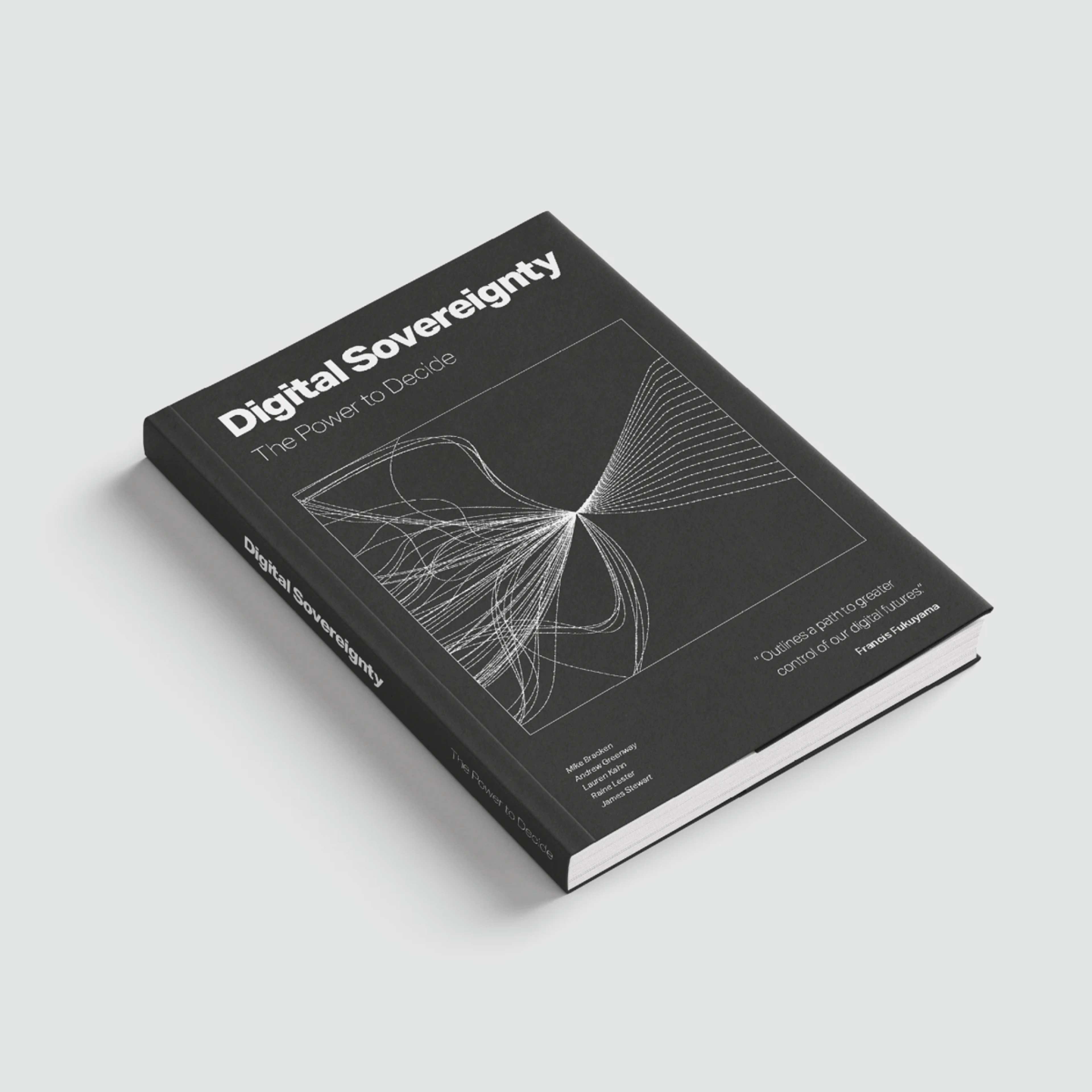
Published today in the UK, and available in North America from October 13, the book argues that the defining challenge of the AI age is not who owns technology, but whether institutions retain the freedom to act when technology, markets, or geopolitical circumstances change.
At a time when governments around the world are investing heavily in artificial intelligence, sovereign computing infrastructure, and national technology strategies, the book challenges the growing focus on technological ownership.
But the issue extends beyond governments. Businesses and other institutions face the same challenge as they become increasingly dependent on a small number of powerful technology providers.
The authors argue that genuine sovereignty depends on whether organisations can continue to make independent decisions, adapt to changing circumstances, and avoid becoming locked into systems and suppliers they no longer control.
Mike Bracken said: "Institutions rarely lose sovereignty in a crisis. They lose it one reasonable decision at a time.
"The biggest risk facing many organisations today is not that somebody takes control away from them. It's that they gradually give it away.
"Every technology decision can make it harder or easier to change direction in the future. Too often, institutions only discover they have lost that flexibility when circumstances demand it."
Bracken is widely recognised as one of the architects of modern digital government, helping establish Britain’s reputation as a global leader in digital public services.
He and his co-authors now advise governments and major institutions around the world on technology and digital transformation through their work with PD.

In Digital Sovereignty: The Power to Decide, they argue that concerns about artificial intelligence, critical infrastructure, national resilience, economic competitiveness, and state capacity are increasingly connected by a single question: whether institutions retain the power to decide their own future.
They warn that many organisations are mistaking technological adoption for technological control. As AI becomes embedded across public services, infrastructure, and the wider economy, dependencies on a small number of providers are growing deeper, more widespread, and harder to reverse.
Bracken said: "The organisations that succeed in the coming decade will be the ones that understand the difference before it is too late.
"Every institution depends on technology. The question is whether that technology expands your freedom to act or instead narrows it."
Digital Sovereignty: The Power to Decide is published by London Publishing Partnership and is available in the UK from September 29, 2026, and in North America from October 13, 2026.