AI consulting
We help organisations get real value from AI by readying their teams, services and governance, and building leadership confidence.
Read more
Can AI prototyping play a role in aiding an organisation on its transformation journey? That’s a question we were keen to answer with one that specialises in journeys, London North Eastern Railway (LNER).
The brief was simple: use AI to reimagine service delivery through rapid AI prototyping, demonstrating change that LNER’s frontline staff can benefit from immediately. LNER wanted a set of AI prototypes, generated using Claude, Gemini AI and Replit, that could be developed into tools.
But it became clear during our work together that the most valuable outcome wasn’t the tools themselves, but the constructive conversations they sparked by helping to hold up a mirror to the organisation, and surface what really needed to change.
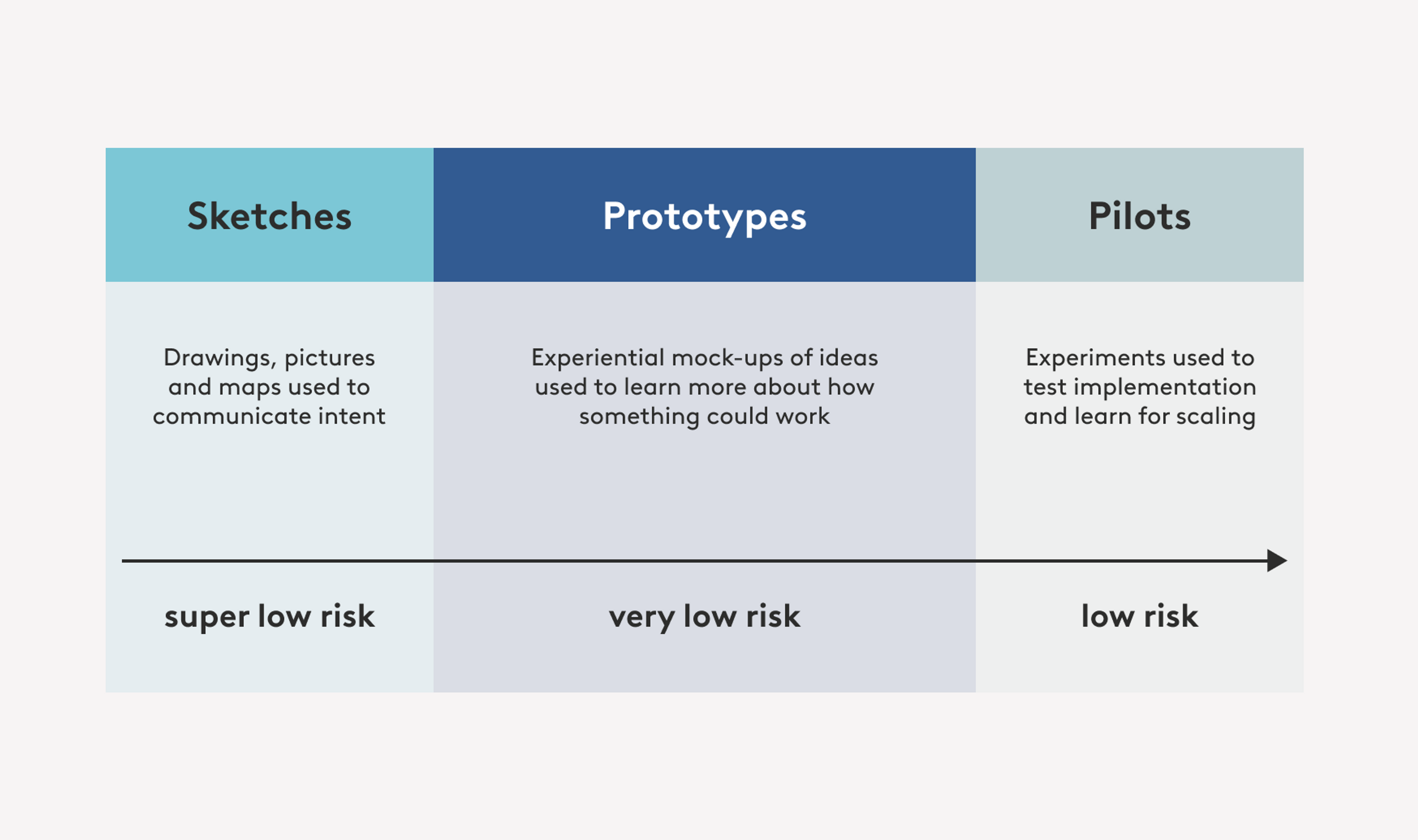
That was all possible thanks to the approach we took: collaborating, framing prototypes as sketches rather than finished products, and harnessing AI as a vehicle for conversation.
Collaborating on AI
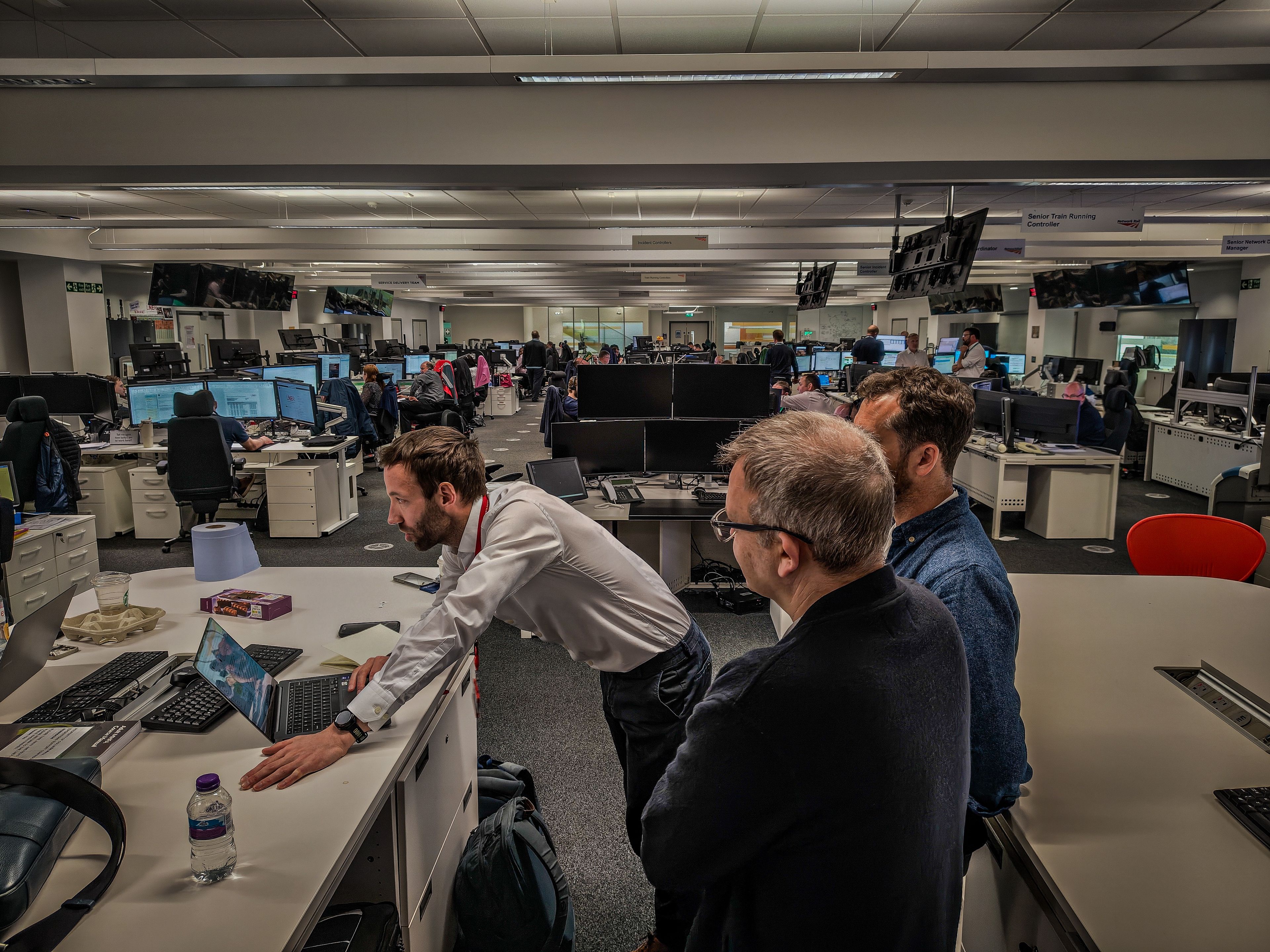
We worked closely with the LNER team to make sure we had robust insights to inform the design of our AI prototypes. To build on their existing insights, we conducted research with staff across the UK, at stations and on trains, and created a set of user needs and hypotheses.
In actively collaborating on what we’d build and how we would get there together, we ensured that the prototypes being built were definitely addressing real needs. In some cases staff had already built their own prototypes, and had their own ideas about what to build - input which we also embraced.
This approach helped to shape the initial prompts we used to to begin building multiple AI prototypes, such as this one:
“Create a tool which ensures all LNER staff have the right information so they know where a delay is happening, what the impact is, what the response is, and any decisions to be made”
Talking about AI in the right way
With the prototypes built and ready to share with LNER staff, we were keen to ensure they would launch the right kinds of conversations: “could this prototype solve a problem?”, “would it help customers?”, “what cultural barriers might we encounter if we implemented it?”....
If the prototypes looked too polished, or worked too well, we’d risk getting into the weeds of unproductive discussions, like visual design choices, or when the prototype could be rolled out wholesale. The more professional something looks, the more likely someone is going to ask if it can be used tomorrow.
So we worked on positioning, ensuring the prototypes were presented as sketches rather than finished products.
We even came up with a different name: "fancy sketches".
We found that having the right conversations was easy to do with LNER’s frontline rail staff, who were tech-savvy and happy to use new tools and apps, and, where they couldn’t find one, even building their own using open APIs and data sources. Their technical expertise helped us have the conversations that mattered: about team conflicts, communications issues, empowerment gaps, tech hurdles and more.
Through these conversations the true value of rapid-AI prototyping played out. It isn't that they replace developers or build perfect tools, it's that they can close the gap between user research and product design.
AI prototypes fuelling the next steps
As the project evolved, the AI prototypes continued to be the best vehicle to help us have tough conversations.
When we played back further iterations of the prototypes following feedback, to stakeholders, we found we were having the same important conversations, but from different perspectives. These conversations may have happened eventually, but thanks to our approach it meant we could have those conversations much faster, with more of the right people, in a more productive way.
For example, it was one thing to build a tool to solve a problem, such as with our prompt:
“Create a tool which ensures all LNER staff have the right information so they know where a delay is happening, what the impact is, what the response is, and any decisions to be made”
But would it actually change the way LNER station and train collaborated with each other? Perhaps the tool would solve the train staff’s problems, but what about station staff?
And so we began to see in real-time the breakdown of silos and beginnings of new collaborations - teams and people stepping out of slow decision processes and hierarchies - and a will to better understand each other and their passengers, and crucially to do more, faster.
At PD we believe true progress requires multidisciplinary teams to work together from the very beginning through to the end. AI enabled LNER’s multidisciplinary team - specialists with varied skills, knowledge and experience - to get to the big issues faster.
The bottom line: AI can get your organisation talking, faster
No organisation can expect AI used this way to fix its business infrastructure.
You can build a hundred AI prototypes, but if your underlying systems don't talk to each other, your users will still be stranded. Successful transformation for the intelligence era means fixing the basic infrastructure - integration, data flow, offline capability, and reliable connectivity - while keeping the end-user’s experience at the centre of your priorities.
Likewise, AI prototyping didn't solve LNER's operational challenges. The hard work of building trust, breaking down communication barriers, and empowering frontline staff still remains.
But by using AI prototyping to skip LNER’s traditional, slow, expensive prototyping cycles, we proved what's possible in weeks rather than months or years. Turning qualitative user insights into tangible, testable prototypes, we got the right people talking, dreaming, and collaborating, enabling conversations that might otherwise have taken a long time to happen.
If you want to thrive in the AI era, get started by building a multidisciplinary team, let them talk to the right people, let them build things quickly, test things quickly and go from there. Testing, learning and iterating will always be the key to building better services.
Thanks to AI, you can do it a little quicker.

Principal Consultant